



Chasing Horizons: A Journey Into the Unknown
The Psychology, Philosophy, and Practice of Traveling Beyond the Map
Chapter 1: The Call of the Void
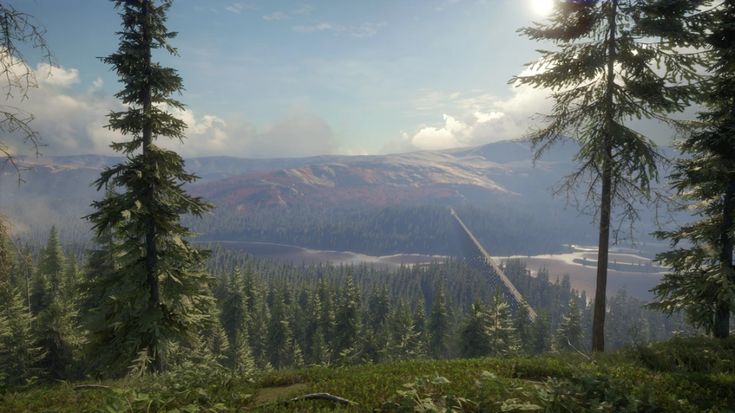
There is a specific feeling that hits you when you look at a map and see a blank space. For some, it is terrifying—a zone of uncertainty where dragons used to be drawn. But for others, that blank space is a magnetic force. It is the call of the horizon.
We live in an era of hyper-visibility. Every mountain peak has a geotag; every hidden café has a Yelp review; every jungle trek has been documented in 4K resolution on YouTube. The world feels mapped, categorized, and conquered. Yet, the human spirit retains a primal itch for the terra incognita—the unknown land.
“Chasing Horizons” is not just about moving physically from point A to point B. It is a rebellion against the predictability of modern life. It is the conscious decision to step off the paved road, to silence the GPS, and to surrender to the chaos of the world. When we chase the horizon, we are not looking for a destination; we are looking for a version of ourselves that can only exist in the absence of the familiar.
The true traveler knows that the destination is merely an excuse to leave. The real journey is the internal dismantling of who you think you are. When you stand on a dusty roadside in a village whose name you cannot pronounce, waiting for a bus that may never come, you are stripped of your job title, your social standing, and your routine. You are left only with your wits, your patience, and your openness to the world. That is the moment the horizon stops being a line in the distance and becomes a state of being.
Chapter 2: The Neuroscience of Novelty
Why do we do it? Why do we leave the comfort of our climate-controlled homes to sleep on hard floors, eat questionable food, and struggle through language barriers? The answer lies in the architecture of the human brain.
Neuroscientists have long studied the concept of neuroplasticity—the brain’s ability to reorganize itself by forming new neural connections. Routine is the enemy of neuroplasticity. When you walk the same route to work, drink the same coffee, and talk to the same people, your brain goes into autopilot. It stops recording. This is why years can fly by in a blur; the brain has nothing new to anchor the memories.
Travel, specifically travel to the unknown, acts as a cognitive shock therapy. When you navigate a chaotic market in Marrakesh or decipher a train schedule in rural Japan, your brain is firing on all cylinders. The hippocampus, the area responsible for memory and learning, lights up. You are processing new smells, new social cues, and new spatial geometries.
This state of heightened alertness is called “epistemic curiosity.” It is the dopamine-fueled drive to eliminate information gaps. When we are in an unfamiliar environment, our senses sharpen. Colors seem brighter, sounds are more distinct, and time actually feels like it slows down. We are not just “seeing” the world; we are physiologically engaging with it.
Furthermore, the unknown builds resilience. In psychology, “tolerance for ambiguity” is a key marker of mental health. It is the ability to remain calm and functional when the rules are unclear and the outcome is uncertain. There is no better training ground for this than travel. When the ferry is cancelled, or the hostel is closed, or you get lost in a thunderstorm, you are forced to adapt. You learn that discomfort is temporary and that you are more capable than you believed. You return home not just with photos, but with a rewired brain that is less afraid of change.
Chapter 3: The Art of Getting Lost
If the unknown is so beneficial, how do we find it in a world of algorithms? We must learn the lost art of getting lost.
The Anti-Itinerary
Most people travel like project managers. They have spreadsheets, time slots, and “must-see” lists. To chase the horizon, you must burn the spreadsheet.
- The One-Way Ticket: The ultimate commitment to the unknown. It removes the psychological safety net of a return date.
- The “Compass Method”: Instead of a destination, pick a direction. Decide to head “North” or “East” and stop when you find something that interests you.
- The Second-City Rule: Skip the capitals. Paris is beautiful, but it is curated. Go to Lyon, or better yet, a village in the Auvergne that doesn’t have a tourism board.
Digital Minimalism
The smartphone is a tether to the known world. It is a shield we hold up against the vulnerability of being a stranger. To truly enter the unknown, you must lower the shield.
- Offline Maps Only: Download the map for safety, but turn off the turn-by-turn navigation. Force yourself to look at landmarks, to read the sun, to ask a local for directions.
- The Translation Gap: Translation apps are miraculous, but they rob you of the charades, the laughter, and the human connection of trying to communicate with gestures. Use them only in emergencies.
Embracing “The Drift”
The French Situationists had a concept called the dérive (drift). It is a technique of rapid passage through varied ambiances. It involves dropping your usual motives for movement and letting the terrain and the encounters attract you. Walk down a street because the light looks golden. Enter a shop because you smell spices. Talk to the person sitting on the bench because they have a kind face. This is not wasting time; it is aligning yourself with the serendipity of the universe.
Chapter 4: Chronicles of the Edge (Case Studies)
What does this look like in practice? Let us look at three distinct environments where the “unknown” is still very much alive.
The White Silence: Antarctica
Antarctica is the closest you can get to leaving Earth while staying on it. It is a place where the scale of nature reduces the human ego to dust. There are no indigenous cultures here, no ruins, no cafes. There is only ice, wind, and silence. Traveling here is not a vacation; it is an expedition. Crossing the Drake Passage—the roughest stretch of ocean in the world—is a rite of passage. But the reward is a landscape that defies comprehension. Glaciers the size of cities crumble into the sea. Penguins, unafraid of humans because they have no evolutionary reason to be, walk right up to you. In Antarctica, the “unknown” is the planet itself. It reminds you that the Earth does not belong to us; we are merely guests on a volatile, frozen rock.
The Kingdom in the Clouds: Bhutan
While Antarctica is a wilderness of ice, Bhutan is a wilderness of culture. For centuries, this Himalayan kingdom isolated itself from the world to protect its traditions. Today, it remains one of the few places where “progress” is not measured by GDP, but by Gross National Happiness. The unknown here lies in the philosophy. The Bhutanese worldview is radically different from the West. You might hike for days to reach the Tiger’s Nest monastery, clinging to a cliffside, only to find that the monks inside are not interested in your camera, but in your peace of mind. The “tourist bubble” pops here. You are forced to slow down, to breathe the thin mountain air, and to contemplate a culture that prioritizes spiritual well-being over material gain.
The Green Labyrinth: The Amazon
To enter the Amazon is to enter the lungs of the world. It is a place of overwhelming vitality. The “unknown” here is biological. Every inch of the rainforest is alive, crawling, growing, or decaying. A journey up the Amazon river, away from the luxury lodges, brings you face to face with the primitive. The sound of the jungle at night is a cacophony of shrieks and buzzes that triggers a deep, ancestral fear. But it also triggers awe. You realize that you are part of a food chain, a small organism in a vast, breathing system. The Amazon teaches you humility. It teaches you that nature is not a backdrop for your Instagram photo; it is a force that commands respect.
Chapter 5: The Stranger is a Friend
The landscape is the stage, but the people are the play. The greatest tragedy of modern tourism is the “observation mode,” where we view locals as background actors in our movie. Chasing the horizon means breaking the fourth wall.
Radical Trust
We are taught from childhood not to talk to strangers. Travel requires you to unlearn this. When you are lost in a foreign country, the stranger is your only lifeline. There is a specific magic that happens when you surrender to the kindness of strangers. It is the cup of tea offered by a shopkeeper in Turkey. It is the family in Vietnam who invites you to their wedding just because you walked past. It is the truck driver in Patagonia who gives you a lift and shares his mate. These moments restore your faith in humanity. You realize that despite what the news tells you, the default setting of most human beings is kindness.
The Language of Shared Experience
You do not need to speak the same language to share a moment. A smile is universal. Laughter is universal. The appreciation of a sunset or the taste of a good meal is universal. Some of the most profound conversations you will ever have will be in broken English, or through drawings on a napkin. These interactions strip away the nuance of politics and ideology, leaving only the raw connection of two human beings trying to understand each other.
Chapter 6: The Dark Night of the Soul
It would be dishonest to paint the journey into the unknown as purely romantic. There is a shadow side.
Loneliness
True travel can be profoundly lonely. When you are thousands of miles from anyone who knows your name, a deep ache can set in. You see something beautiful, and you turn to share it, but there is no one there. But this loneliness is necessary. It forces you to become your own best friend. It forces you to sit with your thoughts without the distraction of social validation. It is in these moments of solitude that you often find the clarity you were looking for.
Fear and Danger
The unknown is, by definition, unsafe. There are real risks: illness, theft, accidents, political instability. Fear is a constant companion. But there is a difference between “danger” and “fear.” Fear is the story your mind tells you; danger is the reality. Learning to distinguish the two is the mark of a seasoned traveler. You learn to trust your gut. You learn to read the energy of a room. You learn that being scammed is just a “stupidity tax” you pay for a lesson learned. These scars, both physical and emotional, become the map of your journey.
The Ethics of Exploration
We must also confront the impact of our presence. Are we explorers, or are we invaders? “Overtourism” is destroying the very places we seek. To chase the horizon responsibly, we must be “ghosts.” We should leave no trace. We should spend our money in local communities, not international chains. We should respect local dress codes and customs, even if we don’t agree with them. The unknown is a gift given to us by the locals; we must treat it with reverence.
Chapter 7: The Return
The hardest part of the journey is not leaving; it is coming back. There is a phenomenon known as “reverse culture shock.” You return home, and everything looks the same, but you feel completely different. Your friends are talking about mortgages and TV shows, and you are still mentally on a bus in the Andes. You feel like a stranger in your own life.
This is the final test of the traveler. The goal is not to stay on the road forever, but to bring the horizon home with you.
- Integration: How do you apply the lessons of the road to your daily life?
- Minimalism: You lived for months out of a backpack; do you really need a closet full of clothes?
- Patience: You waited 12 hours for a train in India; surely you can handle a 10-minute delay in traffic.
- Curiosity: You don’t need a plane ticket to explore. There are “unknowns” in your own city, your own neighborhood, your own family history.
The journey changes your eyes. You no longer look at the world as a static place, but as a dynamic, shifting wonder. You realize that the “unknown” is not a place on a map—it is a mindset.
No responses yet